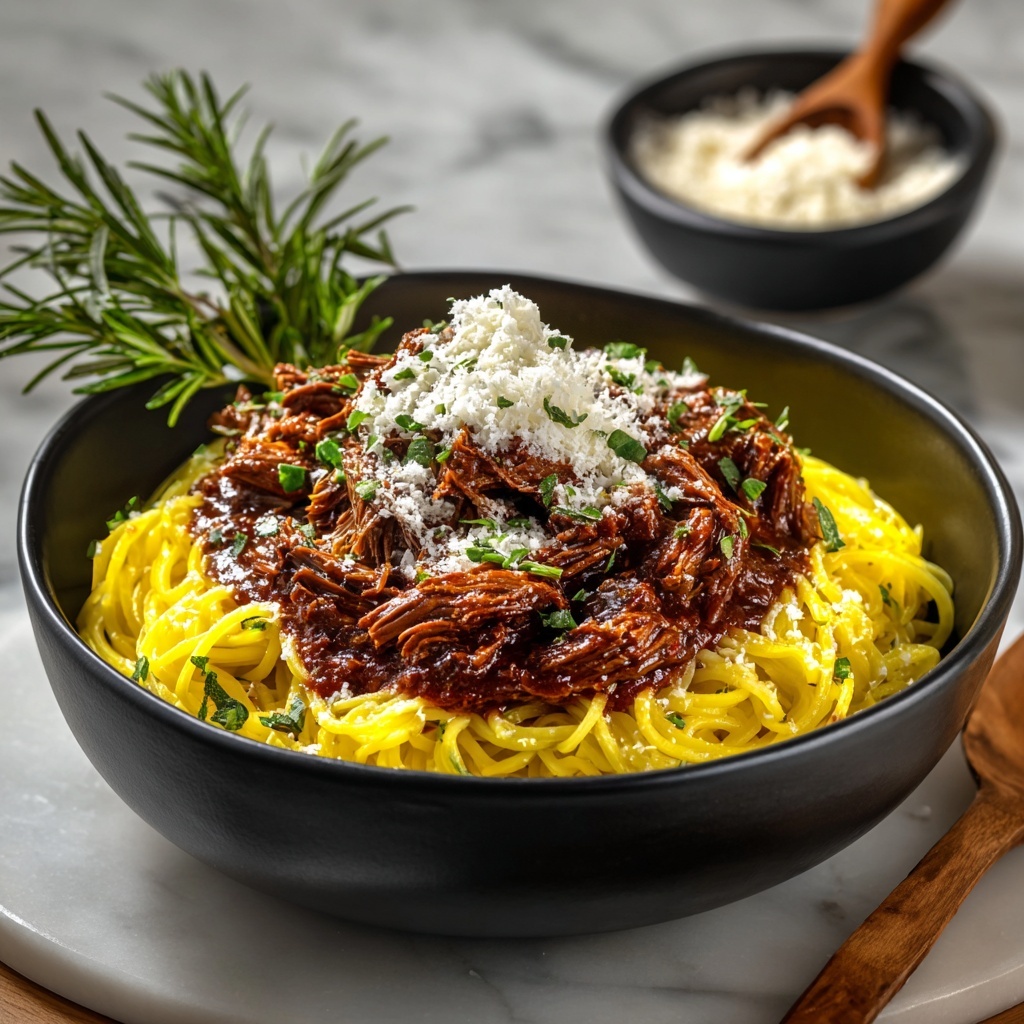
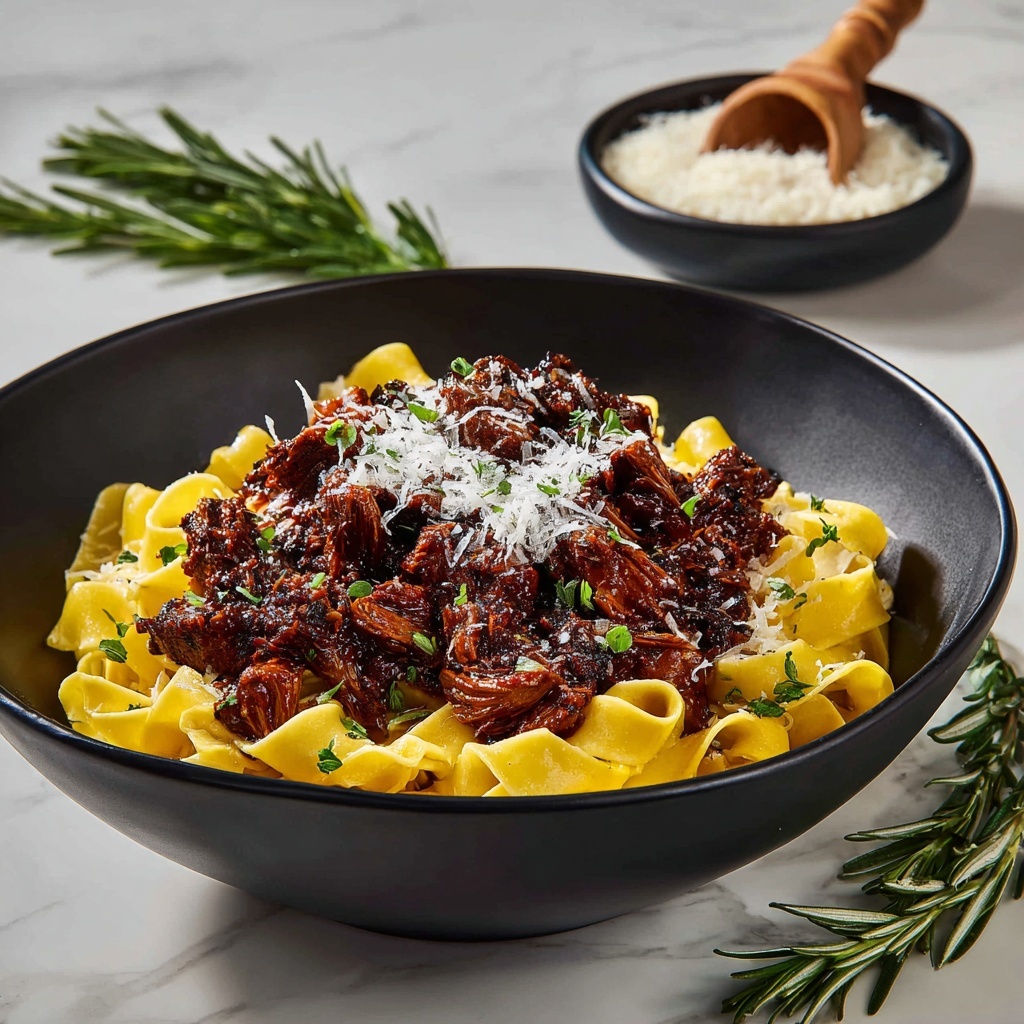
If you are searching for a hearty meal that feels like a warm hug on a plate, this Short Rib Ragu with Pasta: Slow-Braised Tender Meat in Rich Tomato Sauce Recipe is an absolute game-changer. Featuring luxuriously tender short ribs that melt into a deeply flavorful tomato sauce, this dish is a celebration of comfort and sophistication all at once. The slow braise transforms simple ingredients into a rich, velvety sauce that clings perfectly to your favorite pasta, making each bite a delightful experience you’ll want to savor time and time again.
Ingredients You’ll Need
Believe it or not, the magic of this ragu comes from a handful of straightforward ingredients that work harmoniously to build layers of flavor, color, and texture. Each element plays a crucial role, whether it’s the richness of the beef, the freshness of herbs, or the acidity of tomatoes balancing the overall dish.
- Short Ribs (3 lbs, bone-in, English cut): The star of the recipe, these provide incredible flavor and become beautifully tender through slow braising.
- Olive Oil (3 tablespoons, extra virgin): Used for searing the meat, it adds a subtle fruity richness that enhances the depth.
- Yellow Onion (1 large, finely chopped): Adds sweetness and aroma, forming the savory base for the sauce.
- Carrots (2 medium, peeled and finely chopped): Bring a natural sweetness that balances the acidity of the tomatoes.
- Celery (2 stalks, finely chopped): Offers a slight earthy crunch, contributing complexity to the flavor profile.
- Garlic (4 cloves, minced): Adds fragrant aromatic warmth essential to any Italian sauce.
- Tomato Paste (6 ounces): Intensifies the tomato flavor and deepens the sauce color.
- Dry Red Wine (1 bottle, 750 ml): Chianti or Cabernet Sauvignon works beautifully to build richness and tenderize the meat.
- Canned Crushed Tomatoes (28 ounces): Forms the luscious body of the ragu sauce.
- Beef Broth (4 cups, low sodium): Enhances the meaty base and keeps the ragu moist.
- Fresh Rosemary (2 sprigs): Adds an earthy, piney herbal note that perfumes the sauce.
- Fresh Thyme (4 sprigs): Brings a subtle floral touch for balanced complexity.
- Bay Leaf (1): Infuses a gentle herbal bitterness that rounds out the sauce.
- Parmesan Rind (optional): MELTS into the sauce, imparting a subtle umami depth.
- Salt and Freshly Ground Black Pepper: Essential for seasoning to taste.
- Fresh Parsley (chopped, for garnish): Adds a pop of brightness and color at the end.
- Pasta (1 lb, such as pappardelle, tagliatelle, or rigatoni): The perfect vehicle to soak up every drop of the rich ragu.
- Grated Parmesan Cheese (for serving): Adds a salty, savory finish that’s pure comfort.
How to Make Short Rib Ragu with Pasta: Slow-Braised Tender Meat in Rich Tomato Sauce Recipe
Step 1: Prepare and Sear the Short Ribs
Start by patting your short ribs dry to ensure a beautiful sear. Generously season all sides with salt and fresh black pepper. Then, heat the extra virgin olive oil in a heavy-bottomed pot or Dutch oven over medium-high heat. Sear the short ribs in batches, ensuring each side is deeply browned, which takes about 3 to 4 minutes per side. This browning step is essential because it locks in flavor and creates those irresistible caramelized notes that make the ragu so special. Set the seared ribs aside once done.
Step 2: Build the Flavor Base
Reduce the heat to medium and add the finely chopped onions, carrots, and celery to the pot. These aromatic vegetables soften and caramelize over 8 to 10 minutes, releasing their natural sweetness and laying down the foundational flavors your ragu needs. Stir occasionally to avoid burning and encourage even cooking.
Step 3: Add Garlic and Tomato Paste
Next, add minced garlic and tomato paste to the softened vegetables. Cook everything together, stirring constantly for 1 to 2 minutes, until the garlic is fragrant and the tomato paste darkens slightly. This step intensifies the tomato flavor and builds depth in the sauce, setting you up for an unforgettable ragu.
Step 4: Deglaze with Red Wine
Pour in the dry red wine, making sure to scrape the bottom of the pot to loosen all those delicious browned bits stuck from searing. Let the wine simmer and reduce by half, which takes roughly 5 to 7 minutes. This reduction concentrates the wine’s flavor and adds a lovely richness to the sauce that carries through every bite.
Step 5: Add Tomatoes, Broth, and Herbs
Now it’s time to add crushed tomatoes, beef broth, and the aromatic herbs—rosemary, thyme, and bay leaf—along with the Parmesan rind if you have it. Stir all these elements together to combine, creating the luscious, multi-layered sauce that will envelop your tender meat.
Step 6: Braise the Short Ribs
Return the browned short ribs to the pot, nestling them carefully into the sauce. Make sure they are almost covered by the liquid; add more beef broth if necessary. Bring everything to a gentle simmer, cover tightly, and then transfer the pot to a preheated oven at 325°F (160°C). Alternatively, you can simmer it on the stovetop over very low heat. Allow the ribs to braise for 3 to 3.5 hours until the meat becomes incredibly tender and easily falls apart with a fork—a true sign your ragu is on point.
Step 7: Shred the Meat and Finish the Sauce
When the braising is complete, carefully remove the pot from heat and transfer the ribs to a plate or bowl. Use two forks to shred the meat, discarding any bones, fat, or gristle. For a smoother sauce, strain the braising liquid through a fine mesh sieve, pressing on the solids to extract all that rich flavor. Return the shredded meat back to the pot with the sauce, then simmer gently for another 15 to 20 minutes to allow the sauce to thicken and all the flavors to meld perfectly. Season with salt and pepper to taste, then discard the herb sprigs and Parmesan rind.
Step 8: Cook Pasta and Combine
While the ragu finishes simmering, cook your chosen pasta in salted boiling water according to package directions. Reserve about one cup of the pasta water before draining. Add the drained pasta directly into the pot with the ragu and toss to coat thoroughly. If the sauce feels too thick, add a splash of the reserved pasta water until you reach your desired consistency.
How to Serve Short Rib Ragu with Pasta: Slow-Braised Tender Meat in Rich Tomato Sauce Recipe
Garnishes
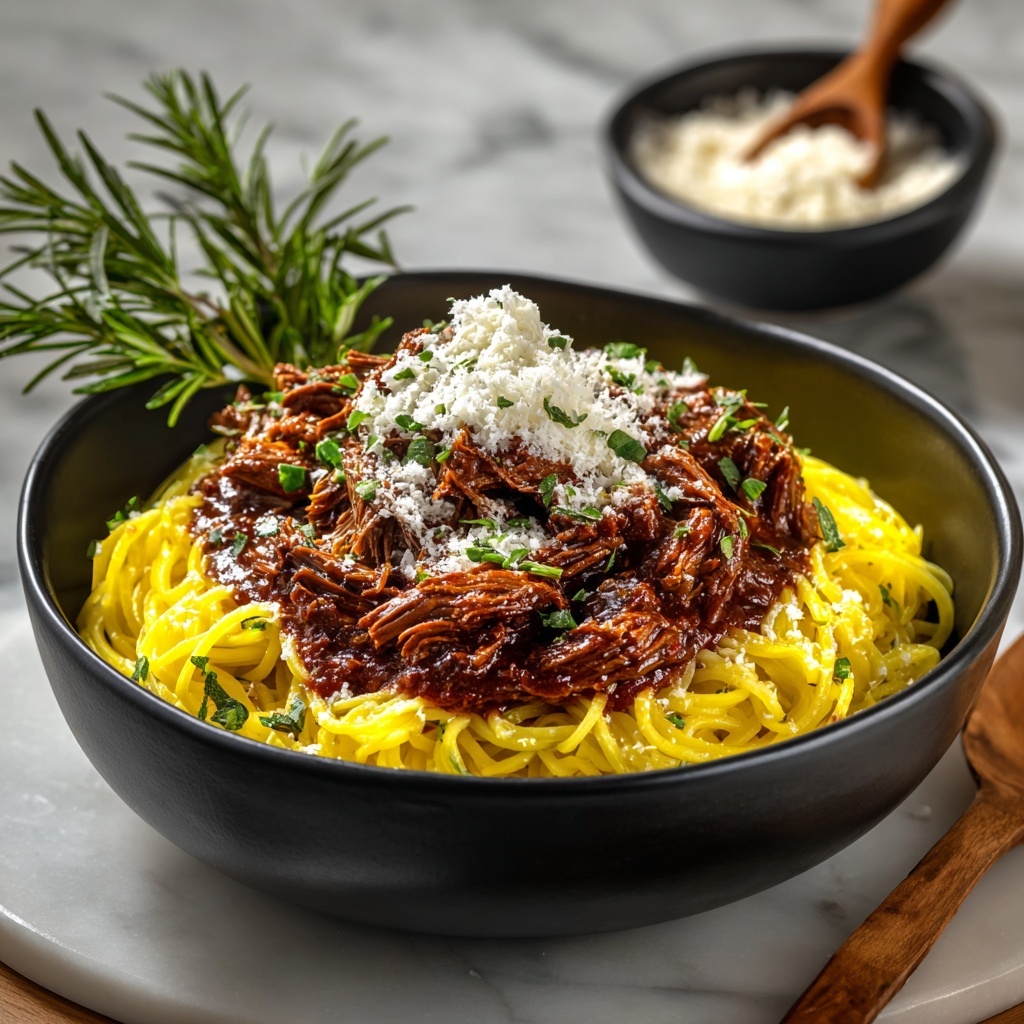
The bright freshness of chopped parsley sprinkled right on top adds the perfect contrast to the deep richness of this ragu. Don’t forget to heap on fresh grated Parmesan cheese, which brings an irresistible salty finish and creaminess that will have everyone asking for seconds.
Side Dishes
This dish pairs beautifully with a crisp green salad tossed with lemon vinaigrette or some roasted vegetables like asparagus or Brussels sprouts. A slice of crusty garlic bread is always a winner, perfect for mopping up every last bit of that luscious sauce.
Creative Ways to Present
For a rustic yet elegant approach, serve the pasta in individual shallow bowls and garnish with a sprig of fresh rosemary or thyme. Alternatively, twirl generous nests of the pasta on warm plates and sprinkle with microgreens to add a modern, vibrant touch. A drizzle of good quality olive oil right before serving elevates the dish’s luxurious feel.
Make Ahead and Storage
Storing Leftovers
Leftover short rib ragu tastes even better the next day because the flavors have more time to meld. Cool the ragu and pasta separately to room temperature, then store them in airtight containers in the refrigerator for up to 3 days.
Freezing
This recipe freezes beautifully. Store the ragu sauce and shredded meat in freezer-safe containers or heavy-duty ziplock bags for up to 3 months. Freeze cooked pasta separately to maintain the best texture, but be aware it may soften slightly upon reheating.
Reheating
Reheat the ragu slowly over low heat on the stovetop, stirring gently to prevent sticking and to warm evenly. Add a splash of water or broth if the sauce has thickened too much. For pasta, reheat in a skillet or microwave adding a little reserved pasta water to restore creaminess and prevent drying out.
FAQs
Can I use boneless short ribs for this recipe?
Absolutely! Boneless short ribs will work just fine and may even be easier to shred. Just adjust the cooking time slightly as they might cook a bit faster without the bone.
What pasta type works best with this ragu?
Wide noodles like pappardelle, tagliatelle, or sturdy shapes like rigatoni are ideal because they hold the thick, rich sauce beautifully, giving you a satisfying bite every time.
Can I make this recipe in a slow cooker?
Yes! After searing the meat and preparing the base, transfer everything to a slow cooker and cook on low for 6 to 8 hours until the meat is tender and the sauce is rich and thick.
Why is it important to brown the short ribs first?
Browning creates a deep, complex flavor through caramelization and adds a beautiful color to the sauce. Skipping this step means losing some of the ragu’s signature depth.
Is it possible to make this recipe gluten-free?
Definitely! Just swap out the pasta for your favorite gluten-free alternative, such as rice noodles or gluten-free pappardelle. The ragu itself is naturally gluten-free.
Final Thoughts
This Short Rib Ragu with Pasta: Slow-Braised Tender Meat in Rich Tomato Sauce Recipe is truly a labor of love that rewards your patience with extraordinary flavor and satisfaction. There is something so genuinely comforting about tender, slow-cooked meat entwined with a rich, aromatic tomato sauce, especially when twirled with perfectly cooked pasta. I can’t recommend this recipe enough for cozy dinners, special occasions, or simply when you want to treat yourself to something memorable. Give it a try, and I promise you’ll fall in love with every bite.
Print
Short Rib Ragu with Pasta: Slow-Braised Tender Meat in Rich Tomato Sauce Recipe
- Prep Time: 30 minutes
- Cook Time: 3 hours 45 minutes
- Total Time: 4 hours 15 minutes
- Yield: 8 servings
- Category: Main Course
- Method: Baking
- Cuisine: Italian
Description
This Short Rib Ragu is a rich and hearty Italian-inspired sauce made by slow-braising bone-in short ribs in a flavorful mixture of red wine, crushed tomatoes, and aromatic herbs. The tender meat is shredded and simmered with the sauce until silky and thick, then tossed with your choice of pasta for a comforting and indulgent meal perfect for special occasions or cozy dinners.
Ingredients
Meat and Oils
- 3 lbs Short Ribs, bone-in, English cut
- 3 tablespoons Olive Oil, extra virgin
Vegetables and Aromatics
- 1 large Yellow Onion, finely chopped
- 2 medium Carrots, peeled and finely chopped
- 2 stalks Celery, finely chopped
- 4 cloves Garlic, minced
Tomatoes and Liquids
- 6 ounces Tomato Paste (one small can)
- 1 bottle (750ml) Dry Red Wine, such as Chianti or Cabernet Sauvignon
- 28 ounces Canned Crushed Tomatoes (one large can)
- 4 cups Beef Broth, low sodium
Herbs and Seasonings
- 2 sprigs Fresh Rosemary
- 4 sprigs Fresh Thyme
- 1 Bay Leaf
- 1 Parmesan Rind (optional)
- Salt, to taste
- Black Pepper, Freshly ground, to taste
To Serve
- Fresh Parsley, Chopped, for garnish
- 1 lb Pasta, such as pappardelle, tagliatelle, or rigatoni
- Parmesan Cheese, Grated, for serving
Instructions
- Season the Short Ribs: Pat the short ribs dry with paper towels. Generously season all sides with salt and black pepper to enhance the meat’s flavor before searing.
- Sear the Short Ribs: Heat olive oil in a large heavy-bottomed pot or Dutch oven over medium-high heat. In batches, sear the short ribs on all sides until deeply browned, about 3-4 minutes per side. Remove and set aside to build flavor through caramelization.
- Sauté the Vegetables: Reduce heat to medium. Add finely chopped onion, carrots, and celery to the pot. Cook, stirring occasionally, for 8-10 minutes until softened and slightly caramelized, forming the base of the sauce.
- Add Garlic and Tomato Paste: Stir in minced garlic and tomato paste. Cook for 1-2 minutes while stirring constantly until fragrant and the tomato paste darkens to deepen its flavor.
- Deglaze with Red Wine: Pour in the red wine and bring to a simmer. Scrape the bottom of the pot to lift browned bits, simmering for 5-7 minutes until the wine has reduced by half, concentrating the flavor.
- Add Tomatoes, Broth, and Herbs: Stir in crushed tomatoes, beef broth, rosemary, thyme, bay leaf, and Parmesan rind if using. Combine thoroughly to create the braising liquid.
- Return Short Ribs to Pot: Nestle the browned short ribs into the sauce in the pot. Add additional beef broth if needed to nearly cover the ribs.
- Braise the Ribs: Bring gently to a simmer. Cover tightly and transfer the pot to a preheated oven at 325°F (160°C). Alternatively, simmer very gently on the stovetop over low heat. Braise for 3 to 3.5 hours until meat is fork-tender.
- Remove and Shred Meat: Carefully take the pot out of the oven (or remove from stovetop). Transfer short ribs to a cutting board or bowl. Use two forks to shred the meat, discarding bones, excess fat, and gristle.
- Strain Sauce (Optional): For a smoother texture, strain the sauce through a fine-mesh sieve, pressing solids to extract maximum flavor. Return the strained sauce to the pot.
- Recombine Meat with Sauce: Add the shredded short rib meat back into the sauce and stir to combine.
- Simmer to Thicken: Simmer the ragu over low heat for 15-20 minutes, stirring occasionally until the sauce reaches desired thickness.
- Adjust Seasoning and Remove Herbs: Taste the sauce and add salt and pepper as needed. Remove rosemary sprigs, thyme sprigs, bay leaf, and Parmesan rind.
- Cook Pasta: While the ragu simmers, cook the pasta in salted boiling water according to package instructions. Reserve about 1 cup of pasta water before draining.
- Toss Pasta with Ragu: Drain pasta and add it directly to the pot with the ragu. Toss to coat evenly. If the sauce is too thick, loosen with reserved pasta water.
- Serve: Plate the pasta and ragu immediately. Garnish with freshly chopped parsley and grated Parmesan cheese for a bright, savory finish.
Notes
- Using bone-in short ribs adds great depth of flavor and richness to the ragu.
- Choosing a full-bodied dry red wine like Chianti or Cabernet Sauvignon provides complexity to the sauce.
- Low sodium beef broth helps control salt levels so you can adjust seasoning at the end.
- For even more tender meat, braise slightly longer if needed until it shreds easily.
- Straining the sauce is optional but results in a smoother, silkier texture.
- Reserve pasta water to adjust sauce consistency and help it cling to the pasta.
- Fresh herbs can be swapped out or added according to preference, but rosemary and thyme are classic choices.