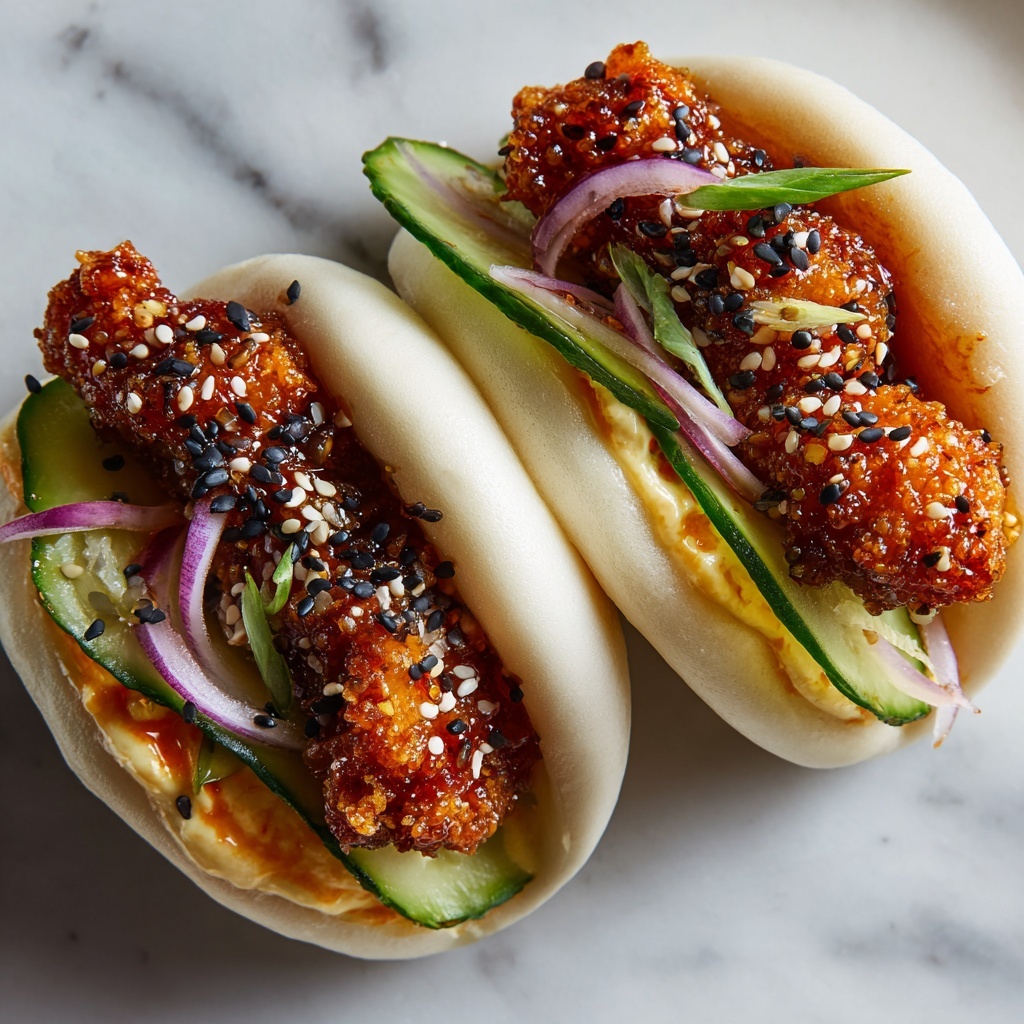
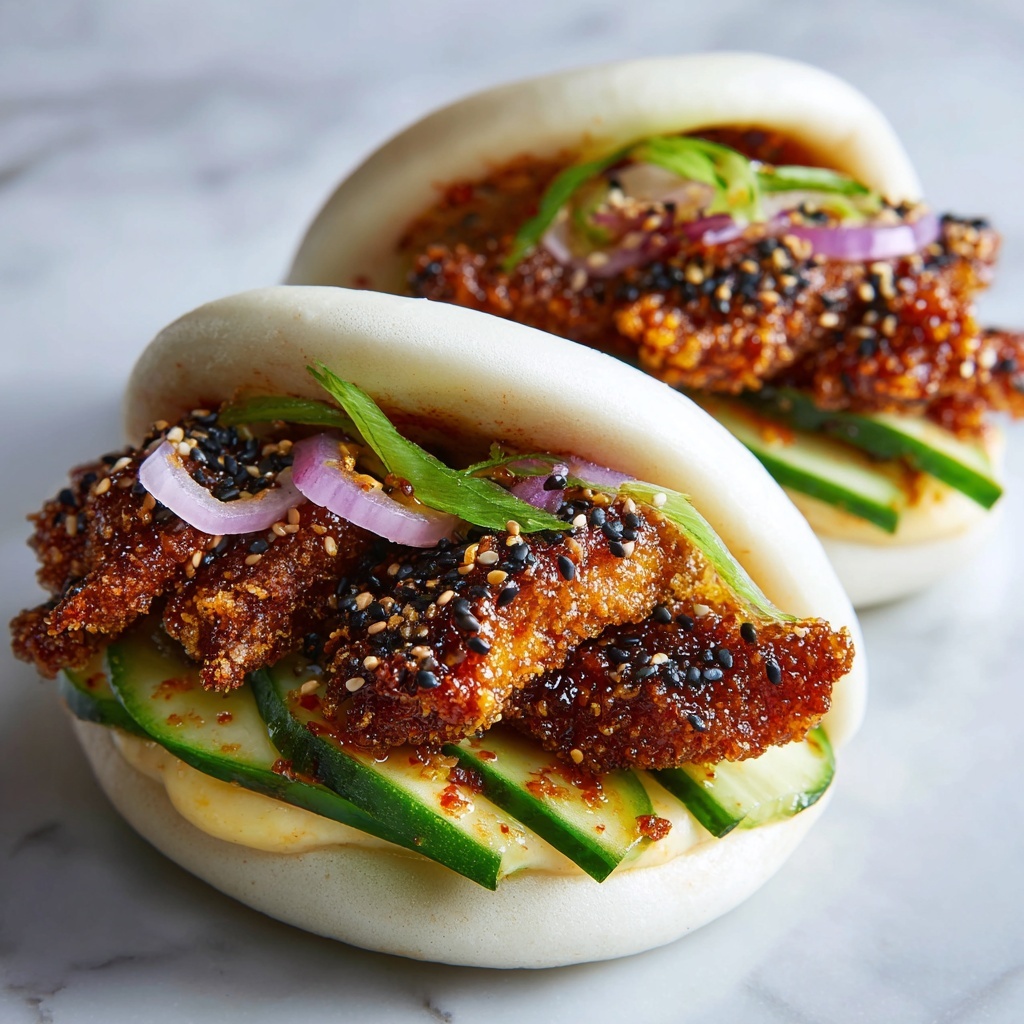
If you love soft, fluffy buns filled with juicy, flavorful chicken and a perfect touch of spice and sweetness, then you are in for a treat with this Korean Chicken Bao Recipe. This dish combines tender Korean-style chicken with a glossy, spicy glaze and refreshingly crisp ribbons of cucumber and onion, all tucked inside pillowy bao buns. It’s the ultimate harmony of textures and flavors that’ll have you coming back for more at every bite.
Ingredients You’ll Need
The magic of this Korean Chicken Bao Recipe lies in its beautifully simple and accessible ingredients. Each one plays a key role, from tenderizing the chicken to creating a crispy yet juicy bite, and crafting that irresistible sweet and spicy glaze. Grab everything on this list and get ready for an unforgettable flavor adventure.
- Whole-egg mayonnaise: Adds creamy richness to the sesame sauce, balancing the spice perfectly.
- Sesame oil: Brings a nutty aroma that’s essential for authentic Korean flavors.
- All-purpose soy sauce: Provides umami depth and saltiness for both marinade and glaze.
- Rice vinegar: Adds a gentle tang to brighten the sauces and marinade.
- Boneless, skinless chicken thighs: Juicy and tender, perfect for absorbing the glaze; breast can be used as a leaner option.
- Egg and cold water: Help the flour coating stick for that perfect crispy crust.
- Plain flour and cornflour (cornstarch): The perfect duo for a light, crisp coating on the chicken.
- Garlic powder, sea salt flakes, and white pepper: Essential seasonings to elevate the chicken’s flavor.
- Neutral oil: Ideal for frying without overpowering the delicate flavors.
- Freshly minced garlic: Infuses the glaze with pungent, savory depth.
- Ketchup: Adds sweetness and a hint of tomato tang to the sauce.
- Gochujang (Korean chili paste): The star of this recipe, delivering spice and umami complexity.
- Honey and brown sugar: Provide luscious sweetness to balance the heat and acidity.
- Toasted sesame seeds: A lovely final touch for both flavor and crunch.
- Store-bought bao buns: Soft and pillowy, ready to be steamed and stuffed with all the goodness.
- Cucumber ribbons and thinly sliced red onion: Add fresh crunch and a hint of sharpness to complement the chicken.
- Coriander (cilantro): Optional, but wonderfully fresh and herbaceous.
How to Make Korean Chicken Bao Recipe
Step 1: Make the Creamy Sesame Sauce
Begin by whisking together the whole-egg mayonnaise, sesame oil, soy sauce, and rice vinegar in a small bowl. This creamy sauce will be your bao’s luscious base layer, adding richness while balancing the spice from the chicken glaze later on. Refrigerate it until you’re ready to assemble.
Step 2: Prepare the Chicken Coating
Place the bite-sized chicken thighs in a medium bowl, then add the egg and cold water. Use tongs to mix well, ensuring every piece is coated to help the flour stick. Then, spread out the flour, cornflour, garlic powder, sea salt flakes, and white pepper on a large sheet of parchment paper. Dip the chicken pieces from the egg mix onto the flour mix, using the parchment sides to lift and coat each piece evenly for that perfect crispy crust.
Step 3: Cook the Chicken
For maximum crispiness, heat a generous amount of neutral oil in a deep pan over medium heat. Fry the coated chicken in batches for 5 to 6 minutes until golden, crispy, and cooked through. Drain on a wire rack or paper towels. Alternatively, for a lighter version, air fry the chicken at 200°C (400°F) for 12 to 14 minutes, shaking halfway through. It’s a fantastic option if you want less oil but still crave that crunch.
Step 4: Make the Glaze
In a small saucepan off the heat, combine oil and freshly minced garlic to avoid burning. Place it on low heat and once the garlic starts sizzling gently, stir in ketchup, gochujang, honey, soy sauce, brown sugar, rice vinegar, and water. Let it simmer for 2 to 3 minutes until glossy and slightly thickened — this glaze is what gives the chicken that irresistibly sticky, sweet, and spicy finish.
Step 5: Coat the Chicken
Toss the freshly cooked chicken pieces through the hot glaze, ensuring that every bite is evenly coated with that beautiful sticky sauce. The heat from the chicken will help the glaze cling perfectly.
Step 6: Steam the Bao
Steam your store-bought bao buns according to their packet instructions or using your preferred steaming method. Keep them warm by covering with a towel and a loose foil tent; this keeps the buns soft and fluffy without drying out, ready to embrace all the fillings.
Step 7: Assemble and Serve
Spread a little of the creamy sesame sauce inside each warm bao, then layer with cucumber ribbons, sliced red onion, coriander if using, and a generous helping of the glazed chicken. Finish with a sprinkle of toasted sesame seeds for extra crunch and nutty flavor. Serve immediately for a mouthwatering, finger-licking experience!
How to Serve Korean Chicken Bao Recipe
Garnishes
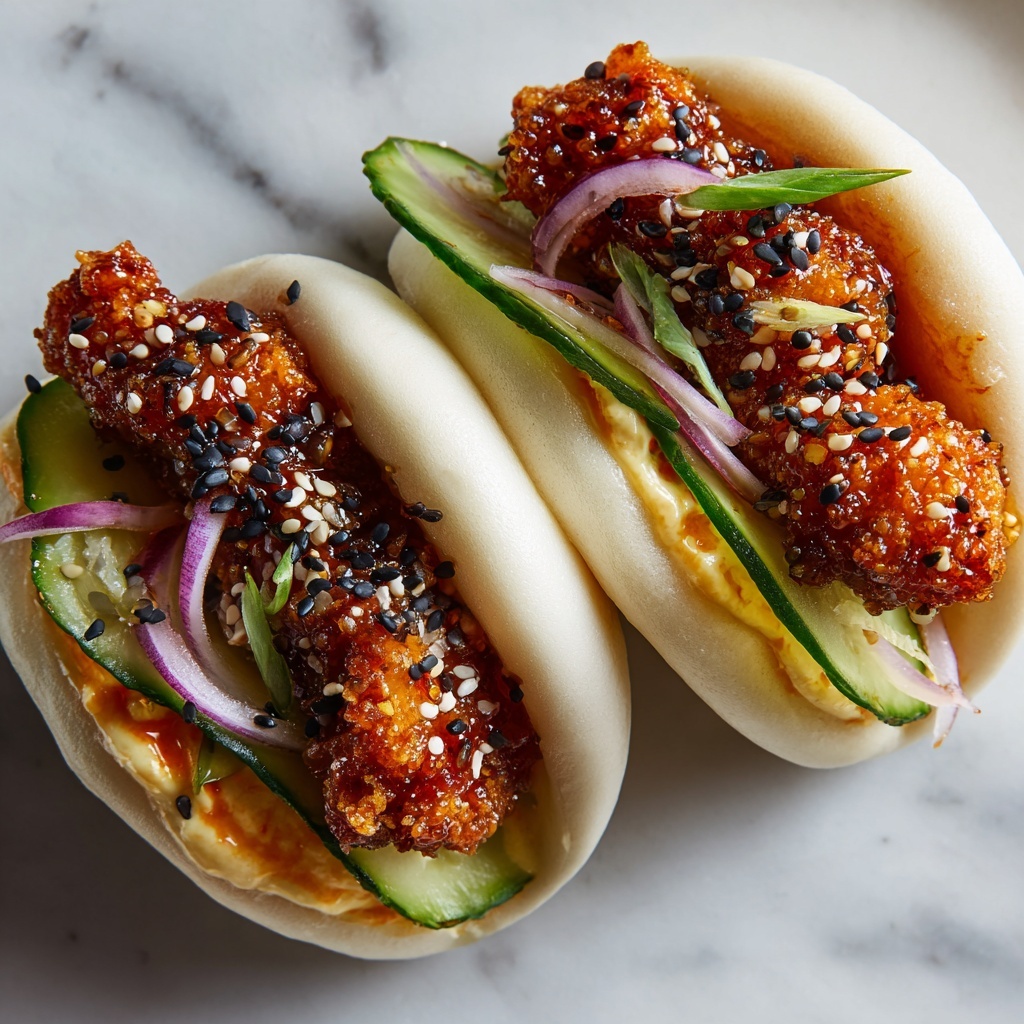
Freshness and texture are everything here, so add crisp cucumber ribbons and thinly sliced red onions as toppings. The toasted sesame seeds sprinkled on top provide a toasty crunch and deepen the nutty aroma, making each bite more satisfying.
Side Dishes
Korean chicken bao pairs wonderfully with vibrant sides like a simple kimchi salad for a fermented kick, pickled radishes for extra tang, or even a lightly dressed green salad. For a heartier meal, sticky fried rice or steamed edamame add extra balance without overpowering the bao.
Creative Ways to Present
If you want to impress guests, serve the bao open-faced on a long platter with little bowls of creamy sesame sauce and extra glaze on the side for dipping. Fresh herbs and sliced chillies scattered on the table invite everyone to customize their bao just the way they like it, making the meal interactive and fun.
Make Ahead and Storage
Storing Leftovers
Store any leftover glazed chicken and sauce separately in an airtight container in the refrigerator for up to 3 days. Keep the steamed bao buns wrapped in a clean kitchen towel and placed inside a sealed container to prevent drying out.
Freezing
You can freeze the cooked glazed chicken in airtight bags for up to one month. It’s best to freeze the bao buns separately, wrapped tightly in plastic wrap and then into a freezer bag, so you can thaw and steam them fresh when ready to eat.
Reheating
Reheat the chicken gently in a pan over low heat or in the microwave until warmed through, adding a splash of water if it feels dry. Steam the bao buns fresh or warm them in the microwave wrapped in a damp paper towel for about 20 seconds to restore softness before assembling.
FAQs
Can I use chicken breast instead of thighs?
Absolutely! Chicken breasts work well too, just be careful not to overcook them as they can dry out faster. The thighs offer more juiciness and flavor, but breasts are a fine substitute.
How spicy is this Korean Chicken Bao Recipe?
The gochujang paste gives a gentle to medium heat depending on the brand. If you prefer milder flavors, start with less gochujang and add more to taste. It’s all about balancing the spicy, sweet, and savory.
Are store-bought bao buns easy to steam?
Yes, most store-bought bao buns come with simple steaming instructions. You can steam them over boiling water with a bamboo steamer or even microwave them wrapped in a damp cloth for a few seconds to keep them soft.
Can I make the glaze ahead of time?
Definitely! The glaze can be made a day in advance and refrigerated. Just warm it gently before tossing it with freshly cooked chicken for best results.
Is it possible to bake the chicken instead of frying or air frying?
You can bake the chicken coated in the flour mixture at 200°C (400°F) for about 20-25 minutes, turning halfway, though it won’t be quite as crispy as frying. It’s a good alternative for a lighter version without special equipment.
Final Thoughts
This Korean Chicken Bao Recipe is a joyful celebration of contrasting textures and bold flavors, perfect for sharing with friends or family. Whether it’s a casual night in or a special occasion, these bao buns always deliver that wow factor with every bite. So rally your ingredients and give this recipe a whirl—you’ll soon understand why it’s quickly become a personal favorite that’s so easy to love.
Print
Korean Chicken Bao Recipe
- Prep Time: 15 minutes
- Cook Time: 25 minutes
- Total Time: 40 minutes
- Yield: 12 servings
- Category: Main Course
- Method: Frying
- Cuisine: Korean
Description
Korean Chicken Bao is a delicious fusion recipe featuring tender boneless chicken thighs coated in a crispy batter and glazed with a glossy, spicy-sweet Korean sauce. Served inside soft steamed bao buns and garnished with fresh cucumber ribbons, red onion, coriander, and a creamy sesame sauce, this recipe offers a delightful combination of textures and flavors perfect for a flavorful snack or meal.
Ingredients
Creamy Sesame Sauce
- ½ cup (125 g) whole-egg mayonnaise
- 1 tsp sesame oil
- 1 tsp all-purpose soy sauce
- 1 tsp rice vinegar
Chicken and Coating
- 500 g (1 lb) boneless, skinless chicken thighs, cut into bite-sized pieces (can be substituted with chicken breast)
- 1 egg
- 2 tbsp cold water
- ½ cup (75 g) plain (all-purpose) flour
- ½ cup (60 g) cornflour (cornstarch)
- 1 tsp garlic powder
- 1 tsp sea salt flakes
- ¼ tsp white pepper
- Neutral oil of choice, for frying (e.g., light olive oil)
Glaze
- 1 tbsp neutral oil of choice (e.g., light olive oil)
- 2 tsp freshly minced garlic
- 2 tbsp ketchup
- 2 tbsp gochujang (Korean chilli paste)
- 2 tbsp honey
- 2 tbsp all-purpose soy sauce
- 1 tbsp brown sugar
- 1 tbsp rice vinegar
- 2 tbsp water
- 1 tbsp toasted sesame seeds
Assembly and Garnishes
- 12 store-bought bao buns (for steaming)
- 2 small cucumbers, thinly sliced into ribbons
- ½ red onion, thinly sliced
- ¼ bunch coriander (cilantro), finely chopped (optional)
- 2 tsp toasted sesame seeds
Instructions
- Make the creamy sesame sauce: In a small bowl, whisk together mayonnaise, sesame oil, soy sauce, and rice vinegar until smooth. Refrigerate until ready to use to allow flavors to meld.
- Prepare the chicken coating: Place the chicken pieces into a medium bowl, add the egg and cold water, and use tongs to mix well ensuring all pieces are coated.
- Prepare the flour coating: On a large sheet of parchment paper, combine the plain flour, cornflour, garlic powder, sea salt flakes, and white pepper. Spread evenly to create a flat coating surface.
- Coat the chicken: Using tongs, lift chicken pieces from the egg mixture, allowing excess to drip off. Place the chicken onto the flour mixture on the parchment paper and fold the edges of the paper around the chicken to thoroughly coat each piece in the flour mixture.
- Cook the chicken: Option A (Frying): Heat neutral oil in a deep, heavy-based pan over medium heat. Fry the chicken in batches for 5–6 minutes until golden brown, crispy, and cooked through. Drain on a wire rack or paper towels. Option B (Air Frying): Lightly spray the coated chicken with neutral oil and air fry at 200°C (400°F) for 12–14 minutes, shaking halfway through. This method produces a lighter, though slightly less crispy, result.
- Make the glaze: In a small saucepan or non-stick frying pan, add oil and minced garlic. Heat over low heat just until garlic starts to sizzle gently to prevent burning. Stir in ketchup, gochujang, honey, soy sauce, brown sugar, rice vinegar, and water. Simmer for 2–3 minutes until sauce is glossy and slightly thickened.
- Coat the chicken in glaze: Add the freshly cooked chicken to the glaze and toss thoroughly so each piece is evenly coated with the sauce.
- Steam the bao: Steam the store-bought bao buns according to packet instructions or via preferred steaming method. After steaming, keep the buns warm by placing them on a plate covered with a clean tea towel and tented loosely with foil to retain softness and warmth for up to 20–25 minutes.
- Assemble the bao: Open each warm bao bun and spread a little creamy sesame sauce inside. Layer with cucumber ribbons, sliced red onion, chopped coriander if using, and top with the glazed chicken pieces.
- Serve: Finish each assembled bao with a sprinkle of toasted sesame seeds and serve immediately to enjoy the fresh flavors and textures.
Notes
- Gochujang varies in spice levels; adjust amount according to your heat preference.
- For steaming bao buns, you can use a bamboo steamer, a metal steamer basket over boiling water, or microwave steam bags depending on convenience.
- To keep bao buns soft and warm after steaming, cover them with a damp cloth and foil as described to prevent drying out.
- Chicken thighs are preferred for juiciness but chicken breast can be used as a leaner substitute.
- For a lighter version, the air frying method is a great alternative though the coating will be slightly less crispy.